

Sold as:

from £6.99

Sold as:
from £19.99
 5 Star Service Rating




 Secure, One-Tap Checkout
 5 Star Feefo Rating
 Hand Picked, Delivered to Your Door!
 1 Year Bareroot Guarantee
 Platinum Trusted Service Award 2026
 Mail Order Plant Experts - Est. 1949

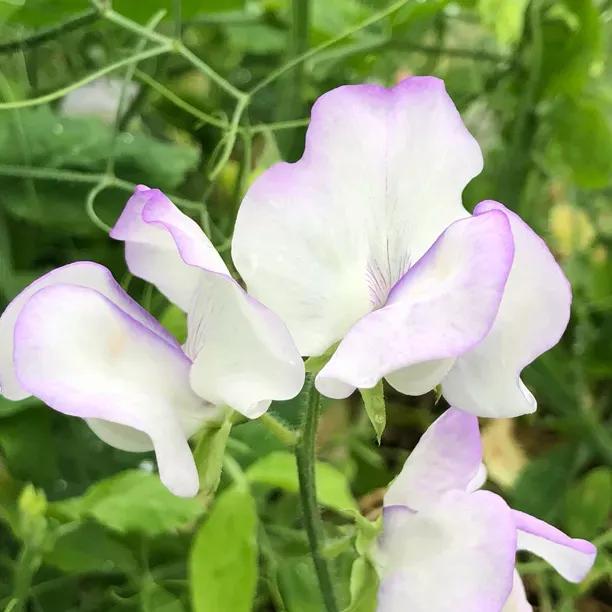





The flowers are the palest lavender-blue, almost white in some lights, with a crisp rim of navy tracing every petal edge. This is a picotee pattern, and it gives the blooms a delicacy that photographs rarely capture. In reality they look hand-painted. The colour does not fade or wash out over the life of each flower, which is unusual for a pale variety and part of why Albutt Blue has held the RHS Award of Garden Merit since 2000.
Then there is the scent. Roger Parsons rates Albutt Blue 5 out of 5, and English Sweet Peas gave it an unprecedented 6 on the same scale. One small bunch perfumes a room. As a Semi-Grandiflora it sits between the old heritage types and the modern Spencers, combining the intense fragrance of the Grandifloras with larger flowers and longer stems. The name is not a pun on the colour. It was raised by a Mr Harvey Albutt, and Eagle Nurseries in Somerset had the good sense to introduce it in 1999.
Most sweet peas earn their keep in a vase, but Albutt Blue is worth growing for the garden alone. As a Semi-Grandiflora it flowers from the base upward, so you see blooms from head to foot rather than just at the top of the plant. On a patio obelisk it is at nose height for much of the display, which is exactly where you want a variety with this much scent. A pot by a back door, a wigwam next to a bench, an arch over a path: give it a position where people pass close enough to notice.
Full planting and care instructions are in our sweet pea growing guide.
Lord Nelson (deep navy-violet Grandiflora, scent 5) is the classic pairing. Its saturated colour picks up the picotee edge and amplifies it. For a heritage combination with extraordinary combined scent, try Matucana (maroon-and-violet Modern Grandiflora) alongside. For contrast, Jilly (warm ivory-cream Spencer, AGM) does something unexpected with the blue. All three are strongly scented, so the combined effect on a warm evening is exceptional.
At the foot of the supports, a ribbon of lavender makes a natural companion. Hidcote or Munstead in full flower while the sweet peas are at their peak gives you two layers of scent and a blue-on-blue planting that looks deliberate even when it was accidental.
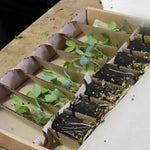
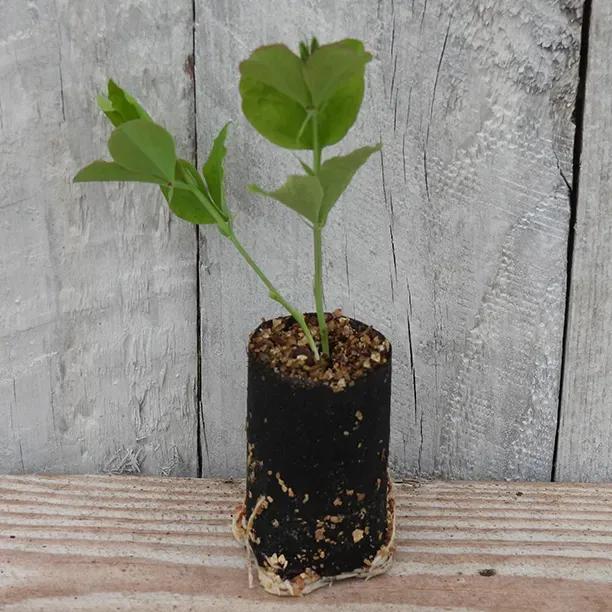
Our sweet peas are not mass-produced. The seed, which we collect ourselves, is hand-sown at two seeds per plug in our Somerset polytunnel. After germination, the weaker seedling is removed. Every plant is then pinched out to encourage bushy growth and hardened off before dispatch. What you are buying are sturdy, garden-ready jumbo plug plants that have had the best possible start.
Your sweet peas go out by next-day courier between March and May, packed in purpose-designed recycled cardboard packaging. They arrive ready for the ground or a container. We have real people on the phone in Somerset who will sort out anything that is not right. We hold a Feefo Platinum Service Award and have been named a Which? Best Buy plant supplier – endorsements that came from our customers, not our marketing team.
Roger Parsons rates it 5 out of 5, and English Sweet Peas gave it an unprecedented 6 on their equivalent scale. In our experience, only King's High Scent and Matucana come close, and they are quite different flowers. If scent is your priority, Albutt Blue is a safe bet.
A Semi-Grandiflora, which sits between the old heritage types and the modern Spencers. It inherits the powerful scent and vigour of the Grandifloras while also producing larger flowers and longer stems. The NSPS classifies it in the Semi-Grandiflora group, which means exhibitors enter it in a separate section from the Spencers.
Yes, awarded in 2000 and still current. Twenty-five years of continuous recognition, which reflects a variety that performs well across different soils, seasons, and parts of the country.
A good choice for pots, particularly near a doorway or bench where you can enjoy the scent. Allow 4 litres of compost per plant in a deep container with drainage. Keep the compost consistently moist and feed fortnightly with a high-potash liquid once buds appear. At 1.8m it needs a sturdy support but is more manageable than a full-sized Spencer. Our pots guide covers the detail.
Sweet peas are hardy annuals that complete their life cycle in a single season. At the end of summer, cut the stems at ground level but leave the roots in the soil. As legumes, sweet peas fix nitrogen through root nodules, so whatever follows them gets a natural boost. Our sweet pea collection offers Albutt Blue and over thirty other varieties each spring.


 Sign In
 Saved items