

Sold as:

from £6.99

Sold as:
from £19.99
 5 Star Service Rating




 Secure, One-Tap Checkout
 5 Star Feefo Rating
 Hand Picked, Delivered to Your Door!
 1 Year Bareroot Guarantee
 Platinum Trusted Service Award 2026
 Mail Order Plant Experts - Est. 1949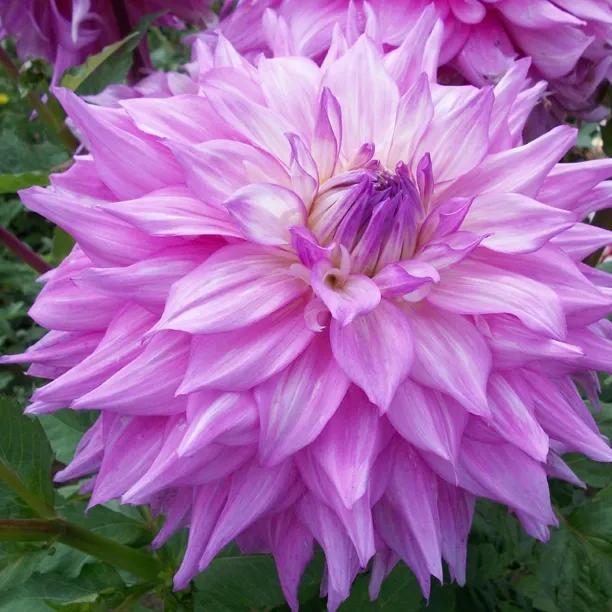




Lavender Perfection has been doing exactly what its name promises since the 1950s. The blooms are enormous — genuinely 20–25cm across, the size of a bread plate — in a soft, warm lavender-pink that is unusual for a dahlia this big. Most dinnerplates come in shades that shout: bold reds, hot oranges, blinding yellows. This one doesn't shout. It holds its own through sheer presence, the way a low voice carries further than a loud one.
It is a formal decorative, which means the broad, flat petals overlap in an even, symmetrical arrangement. On a good plant, the geometry is remarkably precise. The overall effect is architectural rather than blowsy — think National Trust herbaceous border rather than cottage garden chaos. At 100cm it needs the middle or back of a sunny border, and the sheer weight of those flower heads means staking at planting time is not optional. Put the supports in when you plant the tuber, not six weeks later when the stems have already started leaning.
Lavender is a colour that flatterers. It lifts a planting scheme without fighting anything nearby, which is why florists reach for this variety when they need a statement flower that doesn't dominate a mixed arrangement. In the garden, plant it behind David Howard (burnt orange, dark foliage, half the height) for a combination that looks as if a professional designed it. For a bolder contrast, try Tartan — its blackcurrant-and-white stripes against the soft lavender creates something genuinely dramatic. Add ornamental grasses around them: the movement of Stipa or Miscanthus in the wind offsets the solidity of the dahlia heads.
The Aztecs were growing dahlias in Mexico long before Europeans arrived. They ate the tubers — roasted, they taste somewhere between a potato and a water chestnut. Lavender Perfection is not one we would recommend for the kitchen, but the history puts every dahlia in a perspective that makes you think twice about calling them old-fashioned.
Our dahlia tubers are Dutch first-class quality, imported direct and re-graded by us before dispatch. We reject undersized tubers so you get a clump with viable eyes, ready to grow. Delivered by next-day courier from March, with our one-year plant guarantee, Which? Best Plant Supplier, and Somerset-based team on the phone if anything isn't right. Browse the complete dahlia collection, or see our decorative dinnerplate dahlias.
Any dahlia with flowers over 20cm (8in) across. It is not an official RHS classification — the term covers a range of forms, and most dinnerplates (including Lavender Perfection) are formally classified as decorative dahlias. The name simply describes the scale. Our dahlia types guide explains all the forms and sizes.
Without question. The flower heads are heavy — a 25cm bloom full of rain water can snap an unsupported stem overnight. Place a sturdy stake or support ring next to the tuber at planting time. Tie in the main stems as they grow, and keep tying. This is not a variety you can leave to its own devices in a windy spot. Sheltered, sunny positions give the best results.
Dahlias are tender perennials, which means the tubers survive mild winters but not hard frosts. In southern and coastal gardens, a thick mulch of bark or straw over the crown after the first frost often sees them through. In colder, wetter areas, lift the tubers in November and store them somewhere cool, dark and frost-free until spring. Our overwintering guide covers both approaches.
Possible, but not ideal. At 100cm tall with flowers the size of a dinner plate, it becomes top-heavy in a container, and the wind catches those big blooms. If you want a dahlia for pots, American Sun (compact, golden yellow) or Wine Eyed Jill (neat ball, peach with a purple eye) are better choices. Our pots guide has the full list.
Mildly. The tubers and foliage contain compounds that can cause skin irritation and stomach upset if eaten, but they are not life-threatening. Keep dogs away from newly planted tubers, as that is the stage when they look most like something worth chewing. Once the plant is growing, most dogs lose interest. Planting and seasonal care advice is in our dahlia growing guide.


 Sign In
 Saved items