

Sold as:

from £6.99

Sold as:
from £19.99
 5 Star Service Rating




 Secure, One-Tap Checkout
 5 Star Feefo Rating
 Hand Picked, Delivered to Your Door!
 1 Year Bareroot Guarantee
 Platinum Trusted Service Award 2026
 Mail Order Plant Experts - Est. 1949



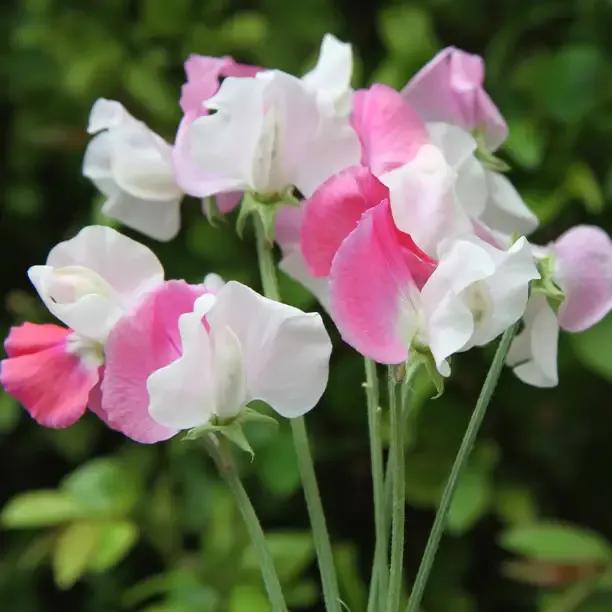
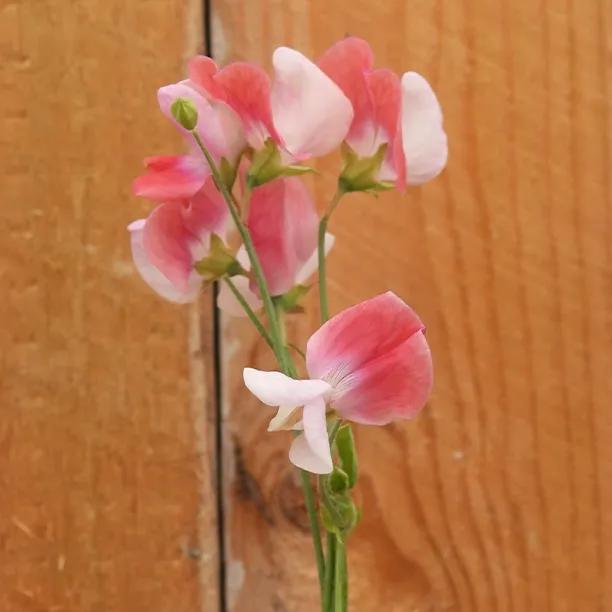





Orange is the rarest colour in sweet peas. True orange does not exist; the genetics will not allow it. But Promise gets closer than almost anything else in commercial production. The colour is a warm salmon-orange, soft rather than bold, with a gentle apricot flush that shifts slightly depending on the temperature and the light. In cool weather the colour deepens; in heat it opens paler. Either way, it reads as warm in a planting where almost everything else is pink, blue, or purple. That alone makes it useful.
Unwins bred Promise as a Spencer, so the flowers are large, well-waved, and carried on long stems. It grows to about 1.8–2m and flowers freely from late June to September with regular picking. The scent is medium, a light, fresh fragrance that you notice when you lean in rather than when you walk past. Promise earns its place not through scent or awards but through colour. If you want your sweet pea planting to include something that is not another shade of blue or pink, this is where to start.
Salmon-orange sweet peas look best against warm backgrounds. Brick walls, terracotta pots, wooden fences with weathered grain. A white trellis works too, but the warmth of the flower reads better against something that echoes it. Avoid planting Promise against cold grey stone or bright blue paint, where the salmon tone can look muddy. Get the setting right and the colour glows.
In a mixed bunch, Promise changes the mood. Three stems of Promise in a jug of blues and purples turns a cool arrangement into something livelier. The salmon-orange does not clash with blue; it warms it, the way a sunset warms a blue sky. Florists call this an accent colour, and in a sweet pea context Promise fills that role perfectly. For growing advice, feeding schedules, and support options, see our sweet pea growing guide.
Valerie Harrod (deep coral-crimson Spencer, AGM) is the obvious warm-toned partner. The two together make a sunset palette from soft salmon through to deep coral, with the Spencer form giving both varieties a lush, ruffled look. Bobby's Girl (pink-and-cream bicolour) adds a softer note between them. For contrast, White Supreme (clean white Spencer) prevents the warm tones from becoming heavy and gives the arrangement some breathing space.
In a kitchen garden, Promise on a wigwam alongside trained fruit trees makes practical and visual sense. An apple or pear on a step-over cordon at the edge of the bed, with the sweet pea wigwam rising behind, combines productive growing with cutting-garden beauty. The sweet peas attract pollinators to the fruit at exactly the right time, and the salmon-orange flowers look handsome against the green of a well-pruned apple.
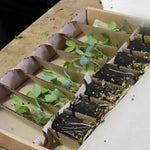
Growing sweet peas well means getting the early stages right. The seed, which we collect ourselves, is hand-sown at two seeds per plug. After germination, the weaker seedling is removed. Every plant is then pinched out to encourage bushy growth and hardened off before dispatch. What you are buying are sturdy, garden-ready jumbo plug plants that have had the best possible start.
We deliver your sweet peas by next-day courier between March and May, packed in recycled cardboard packaging designed specifically for live plants. They are ready to plant from the moment they arrive. If anything is not right, we have real people on the phone in Somerset who will sort it out. We are a Which? Best Buy plant supplier, and we hold a Feefo Platinum Service Award, both earned by keeping our customers happy.
Not true orange. True orange does not exist in sweet peas because the necessary pigment combination is genetically unavailable. Promise is the closest you will get: a warm salmon-orange with an apricot flush. The colour shifts slightly with temperature and light, deepening in cool conditions and paling in heat, but it always reads as warm and distinctly different from the pinks, blues, and purples that dominate the sweet pea palette.
Promise carries a light, fresh sweet pea fragrance at medium strength. You will notice it from a cut bunch on the table and in the garden when you lean in close. It is not one of the heavily perfumed varieties, but for a salmon-toned Spencer the scent is respectable. If scent matters most, grow it alongside a fragrance star like Heaven Scent and let each variety do what it does best.
Valerie Harrod (deep coral-crimson, AGM) intensifies the warm tones. Bobby's Girl (pink-cream bicolour) softens them. Mrs Collier (primrose-cream Grandiflora) adds a pale, heavily scented anchor. All four on the same support would give you a warm-toned planting with real variety of form, from the big Spencer ruffles of Promise and Valerie Harrod to the smaller, open-faced blooms and richer fragrance of Mrs Collier.
Once flowering stops in September, cut all stems at ground level and add them to the compost heap. Leave the roots undisturbed. Sweet peas are legumes, and their root nodules contain nitrogen-fixing bacteria that enrich the soil for whatever you plant in that spot next year. Pull the roots up and you lose that benefit.
Sweet peas are annuals. Promise flowers from late June to September in a single season, then it is finished. There is a perennial relative, the everlasting pea, but it lacks the colour range and the fragrance. For named varieties grown as ready-to-plant plugs every spring, browse our sweet pea collection.


 Sign In
 Saved items