Sold as:

from £6.99



Sold as:
from £19.99
 5 Star Service Rating




 Secure, One-Tap Checkout
 5 Star Feefo Rating
 Hand Picked, Delivered to Your Door!
 1 Year Bareroot Guarantee
 Platinum Trusted Service Award 2026
 Mail Order Plant Experts - Est. 1949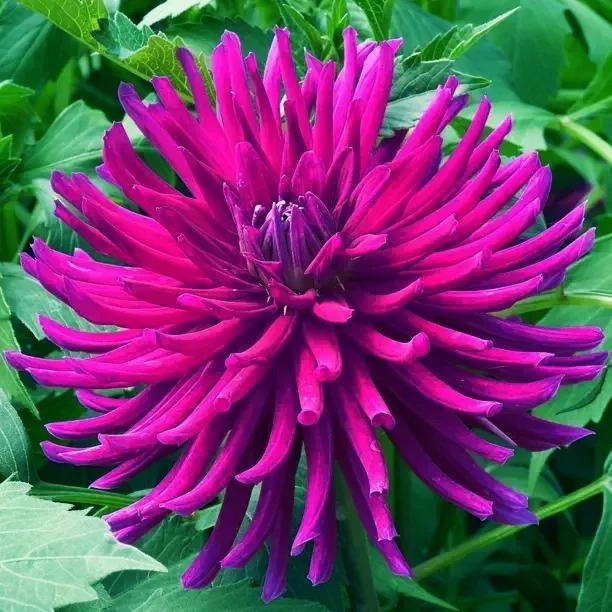




The colour runs deepest at the centre: a concentrated, saturated purple so dark it's almost aubergine. As the quilled petals spiral outward, they lighten through violet to soft lavender at the tips, creating a natural gradient across each 12cm bloom. It's a colour effect that photographs badly and looks extraordinary in real life. The spiky semi-cactus form adds to the intensity — the rolled, pointed petals catch light on their edges while the body of each petal holds shadow.
Purple Gem grows to about 90cm on strong, upright stems that carry a distinctive burgundy-purple flush — even before the flowers open, the plant looks like it means business. The stems are excellent for cutting: straight, long relative to the compact height, and sturdy enough to hold the blooms upright in a vase. It flowers prolifically from July to the first frosts, producing wave after wave of those rich purple heads.
One practical advantage of the semi-cactus form: the quilled petals shed water instead of cupping it. Where flat-petalled decorative dahlias can fill with rain and bow under the weight, Purple Gem shakes it off. In a Somerset autumn — or anywhere in the UK where August isn't guaranteed — that matters. The flowers hold their shape through weather that would flatten a dinnerplate variety, and the saturated purple colour actually deepens in cooler conditions. The blooms you cut in October may be the richest of the season.
Deep purple asks for contrast. Preference (soft apricot semi-cactus) creates a classic purple-and-warm pairing in matching spiky form. Ambition (magenta-purple, same semi-cactus group) continues the purple story at the same height with a completely different colour temperature. For dramatic contrast, Small World (white pompon, RHS AGM) provides clean, geometric white against the spiky purple. Thread ornamental grasses between them — Stipa tenuissima or Miscanthus 'Morning Light' — and the whole border moves.
We select every variety for performance in Somerset's wet conditions. If a dahlia thrives in Castle Cary, it'll do well anywhere in the UK. Every tuber we sell arrives A-grade from specialist Dutch growers — then we grade them again ourselves before they go anywhere near a box. Your tubers arrive neonicotinoid-free, packed in recycled and recyclable materials, and delivered by next-day courier so they reach you in the best possible condition. Browse the complete dahlia collection.
Better than most. The semi-cactus petal shape sheds water rather than holding it, so the flowers stay upright and presentable through wet spells. Flat-petalled decorative and ball dahlias are more vulnerable to rain damage. If you garden somewhere exposed or wet, semi-cactus types like Purple Gem are a sensible choice.
One of the best in our range. The stems are strong, straight, and carry a single bloom each — no branching to complicate arranging. The 12cm flower is the ideal size for mixed arrangements: big enough to anchor a vase, small enough not to dominate it. The two-tone purple adds something no other flower quite matches. Cut when the outer petals are fully open and condition in hot water for thirty seconds.
Semi-cactus dahlias have petals that roll inward (called "quilling") for about half their length, giving the flower a spiky, textural look without being as extreme as a full cactus type. The rolled petals are practical as well as beautiful — they shed rain and resist wind damage better than flat-petalled forms. Purple Gem is a classic example. Our types of dahlias guide covers all the flower forms in detail.
At 90cm with compact 12cm flowers, Purple Gem is one of the semi-cactus types that genuinely works in a container. Use a pot at least 40cm across and deep, good drainage, and feed fortnightly from June. The narrow, upright habit means it won't sprawl over the edges. A single plant in a large terracotta pot against a pale wall makes a striking display. Our dahlias in pots guide has the full detail.
Full sun gives the best results — at least six hours of direct sunlight a day. Purple Gem will tolerate light afternoon shade, but fewer hours of sun means fewer flowers and weaker stems. In a sunny spot with rich, well-drained soil, it's a straightforward plant that rewards the basics: water in dry spells, feed every couple of weeks, and deadhead regularly. Full growing advice is in our dahlia growing guide.


 Sign In
 Saved items